


What NOT to Say on Your Wedding Invitation
Creating the perfect wedding invitation involves balancing elegance with essential details. Your invitation must communicate four key pieces of information: who’s getting married, who’s hosting, the time and date, and the location.
While there are lots of ways to word your wedding invitation, there are certain things you should avoid mentioning to maintain proper etiquette and ensure your invitation is well-received. Here are three crucial things you should never include on your wedding invitation.
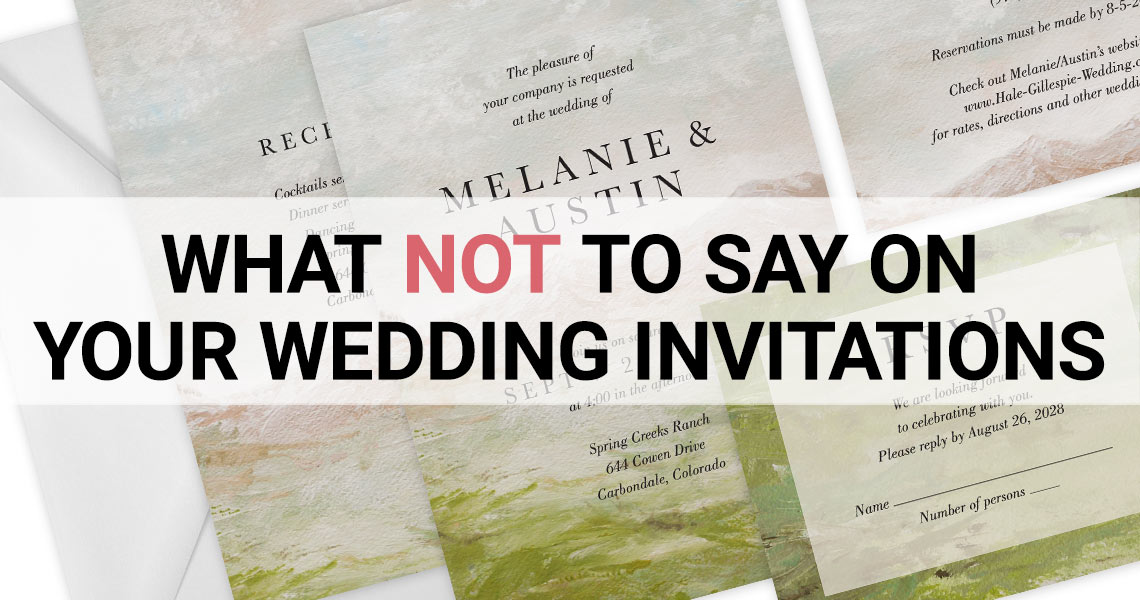
Featured wedding invitation: Mountain Landscape
#1: Do Not Mention Gifts or Gift Registries
One of the most significant faux pas in wedding invitation etiquette is mentioning gifts or gift registries. While it might seem practical to include registry information to guide your guests, it’s considered impolite and presumptuous. Remember - the primary purpose of your wedding invitation is to invite your guests to celebrate your special day, not to suggest that they are obligated to bring a gift.
Traditionally, gift registry details were shared via word of mouth, and this remains an acceptable approach. In the digital age, most guests can easily find your registry information through a quick internet search or through a wedding website.
If you have a wedding website, you can include the URL on a separate information card or the backside of your invitation. This way, you provide the necessary information without breaching etiquette.
Another subtle method is to share registry information through close family and friends. They can help spread the word to other guests, ensuring that the information is available without being directly included in the invitation.
#2: Do Not Explicitly State “No Children”
Deciding to have an adult-only wedding is perfectly acceptable, but it’s crucial to communicate your adult-only wedding with sensitivity. Directly stating "no children, please" on the invitation can come across as blunt. Instead, opt for more gentle and tactful wording.
One effective approach is to address your invitations to the specific adults invited. For example, instead of addressing it to “The Smith Family,” you would address it to “Mr. and Mrs. Smith.” This subtly indicates that the invitation is meant for the adults only. Additionally, you can include a note on your wedding website that politely explains your decision, such as, “Due to space constraints, we are unable to accommodate children at our wedding.”
Another tactful way is to include a line on the RSVP card that reads something like, “We have reserved __ seats in your honor,” which makes it clear that only the named guests are invited. If guests RSVP with additional names or inquire directly, you can gently explain your policy in person or via phone.
#3: Pre- or Post-Wedding Events Should Not Be Mentioned
Your wedding invitation should focus solely on the main event: the ceremony and reception. Mentioning pre- or post-wedding events, such as a rehearsal dinner or a brunch, can create confusion and make the invitation cluttered.
Pre- and post-wedding events are typically reserved for select guests and require separate invitations. This ensures that the primary invitation remains straightforward and clear about the main celebration. Separate invitations for events like the rehearsal dinner can be sent to those who are invited to these additional gatherings.
However, if you are concerned about postage costs, you can include these separate invitations within your main wedding invitation suite. Just ensure they are clearly distinct and correctly placed in the corresponding envelopes to avoid any mix-up. For example, you can include a smaller, coordinating card that provides details for the rehearsal dinner or post-wedding brunch.
Additional Tips for Wedding Invitation Wording
Here are a few more tips to ensure your wedding invitation is perfectly worded:
Keep It Simple: While it can be tempting to add elaborate language and flourishes, simplicity often works best. Clear and concise wording ensures that all the essential details are easily understood by your guests.
Proofread Carefully: Spelling and grammatical errors are embarrassing. Have multiple people review the invitation to catch any mistakes.
Consistent Style: Ensure the wording style matches the tone of your wedding. A formal wedding calls for traditional phrasing, while a casual celebration can have a more relaxed tone.
Include RSVP Information: Provide a clear RSVP deadline and method. Whether it’s a physical RSVP card or an online response, make it easy for your guests to let you know if they can attend.
Crafting a wedding invitation that is both beautiful and informative can seem daunting, but by focusing on what to include and what to avoid, you can create an invitation that sets the perfect tone for your special day. If you have any questions or need help personalizing your wedding invitations, we’re here to help!